Category: Writing

  • Alternatif Eğitim ve Yaratıcı Dans

    Alternatif Eğitim ve Yaratıcı Dans

    Bu yıl gerçekleşen Alternatif Eğitim Konferansı hem açılışında hem de atölyelerinde yaratıcı dans ve hareket çalışmalarına yer vererek ülkemiz eğitimi için hem yeni hem de merak uyandıran bu alanın bilinirlik ve görünürlüğünün artmasına aracı oldu.

    Katılımcılara birlikte açılış etkinliği olarak uyguladığımız Braindance çalışması ilgiyle karşılandı, uygulama sürecinde Türkiye ve Dünya’nın çeşitli yerlerinden konferansa katılan farklı yaş ve eğitim grubundan katılımcı keyifle beden ve zihin ısınmasını sağlayan bu hareketleri uygularken bedenleri ile bağ kurmuş oldular. Çoğunlukla oturdukları yerden yaptıkları bu çalışma sonucunda konferansa daha zinde başladılar, dinleme süreleri arttı, dikkatleri gelişti.

    Çalışmadan aldıkları keyfin yanında; kimi zaman sosyal normlar kimi zaman da yüksek sanatsal-yaratıcı beklentilerden dolayı kısıtlanan, sınırlanan dans eyleminin aslında temelde ne kadar doğal ve yapılabilir, geliştirilebilir olduğunu anladılar.

    Günlük yaşamlarına kolayca uygulayabilecekleri; beden ve ruh sağlıklarını olumlu yönde etkileyebilecek bu çalışmanın biraz farkındalık, destek ve kararlı bir emek süreci ile kitlelere ulaşabildiğinde daha huzurlu, mutlu ve bilinçli bir toplum olabileceğimizi düşünüyorum. Bu düşüncem yaratıcı dans dersleri için de geçerli.

    Sanatsal ustalık kaygısı taşımadan eğitim, terapi ya da hobi amaçlı kullanabilen yaratıcı dans; duygu, düşünce ve kavramları hareket ve dansla ifade edebilmemiz için bize alan açar. Bu esnada hareket kapasitemizi iyileştirir ve geliştirir. Bir sanat formu olarak; rekabetten uzak, bireysel farklılıkları destekleyici, algılamaya yönelik odağı ile yaratıcılık, problem çözme, işbirliği gibi duygusal ve zihinsel beceriler de fiziksel becerilerin yanında geliştirir.(Mac Donald, 1991)

    Bütünsel bir eğitim programı beden ve zihin arasındaki bağı kurup, bu bağı güçlendirip onu hissetmekten geçer. Miller(1988),  bize çocuk için birbiri ile bağlantılı bir evren algısının öneminden bahseder. Burada esas olan; içte duygu, düşünce, inanç ve yargılar dışta ise hareket ve davranışların birbiri ile tutarlı olmasıdır. Yaratıcı dans bu noktada iyi bir dengeleyici ve dışavurum aracı olarak, fizikselin ötesinde tüm varlığı sürece katarak devreye girer. Sadece yaratıcı dansı deneyimlemiş olan çocuklar/yetişkinler onun fiziksel, zihinsel ve duygusal etkilerini içsel olarak da deneyimlemiş olurlar. Çünkü sadece yapılan her hareket deneyimi gerçekten içselleşir, içte yankı bulur. Yaratıcı dans üzerine uzun ve derin konuşmalar yapılabilir ancak işin aslı onu deneyimlemekten geçer.

    Dimondstein(1974)’a göre yaratıcı dans aynı zamanda sembolojik bir dildir, her çocuğun algıladıklarının bedenine yansıması ve ona özgü hareketin dışa vurumudur. Yaratıcı dans eğitmenin derste kullandığı bir müzik, şiir, resim de ayrıca esin kaynağı olabilir. Bunu yaparken farklı dans ve hareket tekniklerinden faydalanır.  

    Bir öğrenme yöntemi olarak öğrenme süreçlerine uyarlanabilen yaratıcı dans(Gardener, Howard 1985) Alternatif Eğitimde Yaratıcı Dansın Kullanımı başlıklı atölye ile Alternatif Eğitim Konferansında yer aldı. Yurtiçi ve yurtdışından 20-50 yaş aralığı içinden pek çok farklı eğitmenlik tecrübesine sahip olan öğretmen, yönetici ve öğrenci katıldı…Hepsi hareketin, dansın nasıl eğitimde kullanılabileceğine dair bilgi ve deneyim kazanmak istiyorlardı…

    Süreçte dans edildi, sorular soruldu, cevaplar bulundu, dinlendi, denendi ve yaşandı…Beden ve hücrelere geçen bu ilk deneyim katılımcılar üzerinde merak ve gelecek için heves uyandırdı.

    Katılımcıların kullanabilmesi, farklı seviyelere adapte edebilmesi adına ilköğretim üçüncü sınıf, hayat bilgisi dersinden “Güneş Sistemi ve Gezegenler” konusu seçildi. Yerel ve yetişkin katılımcıların yanında bir çocuk ve yurtdışından bir katılımcıya geçen atölye; Türkçe ve İngilizce çeviri ile ilerlerken süreçte herkes hem egzersizlere katılma hem de izleyici olma imkanı buldu. Deneyimli öğretmenler ve öğrenciler, yeni mezun öğretmenlerin, branş eğitmenlerinin yer aldığı atölye katılımcıların gözlem ve geri bildirimler ile zenginleşti.

    Atölyeye katılmak, gezegenleri bedenle yaşamak, onların hız ve yapılarını anlamak tüm bu bilgileri dansla dışa vurmak algı süreçlerine bedeni, ritmi, dansı, hareketi, grup çalışmasını katarak bütünsel bir öğrenme fırsatı sundu. Atölyede uygulanan doğaçlama, anlık kompozisyon ve koreografi çalışmaları, önce kağıda ve/veya resme aktarılan duygu ve düşüncelerin sonra dansla yansıtılması katılımcıların kendi bünyelerinde var olan ancak belki bilmedikleri, belki yeterince kullanma şans ve alanına sahip olmadıkları; ancak hala var olan onlara özgü yaratıcı ifade alanını görünürlüğüne dair cesaretlendirici bir kapı açtı…

    Peki bu kapı kalıcı bir değişim için yeterli midir ? Kanımca değildir…Dans ya da bir başka sanat dalı ile eğitimde eleştirel düşünebilen, yaratıcı, özgüvenli bireylerin oluşmasına katkıda bulunmak uzman sanatçı ve eğitmenler tarafında öğrencilere uygulanacak, yıllara yayılmış düzenli çalışmalar ile gerçekleşir. Düzen de devam ve kararlılık ile yerleşik hale gelir, elbette öz korunarak süreç içinde gerektiğinde çağdaş yeniliklere, eklemelere açık da kalabilerek.

    Bu noktada Alternatif Eğitim konferansının ülkemiz eğitim vizyonu adına iyi bir lokomotif olabileceği kanısındayım. Bu yıl konferansa gösterilen yoğun ilgi benim için umut verici oldu, pek çok veli ve eğitimci var olan eğitim sisteminin yanında farklı ve yeni bakış açılarının çocukların bugün ve yarınına olası katkılarını duymak, anlamak için salonda hazır bulundular. Konuşmacılara alternatif eğitim uygulamaları, örnekleri ve felsefesi hakkında sorular yönelttiler. İnanıyorum ki ilerde üretme, anlama, aktarma konularında çok daha çalışkan ve aktif olacağız.

    Bu yıl olduğu gibi her yıl düzenlenebilip vizyon ve deneyim sahibi akademisyen, uzman eğitimci ve alternatif eğitim için örnek teşkil edebilecek uygulayıcıların katılımlarının, sunumlarının aktarılabilmesi hızla değişen dünya dinamikleri içinde yeni eğitim yöntem ve tarzları ile ilerleyebilmek adına son derece önemli. Gerçek olan şu ki sadece ülkemizde değil tüm dünyada aynı anda çok olumlu olayın yanında bizleri umutsuzluğa sevk edebilecek olaylar da olmakta. Eğer olumlu gelişmeleri destekleyen, olumsuzluklar karşısında da ders çıkarıp ilerleyebilen bir bakış açısı üzerinden eğitim sistemimizi yapılandırabilirsek hem biz hem de çocuklarımız çok daha huzurlu olacak. Artık hem bizlerin hem de dünyanın geleceği için esas olan yer yüzündeki yaşamı ve çocukları koruyan, varlığın özüne saygı duyan, her bireyin yapıcı potansiyellerini geliştirebilmesine alan açabilen, demokratik, eşitlikçi, katılımcı eğitim.

    Kaynakça

    Dimonstein, Geraldine. (1971). Children dance in the classroom. New York: MacMillan Publishing.

    Gardner, Howard. (1985). Frames of mind: The theory of multiple intelligence. New York: Basic Books.

    Miller, John. (1988). The holistic curriculum. Toronto: OISE Press.

    Mac Donald(1991) Creative Dance in Elementary Schools: A Theoretical and Practical Justification; Canadian Journal of Education / Revue canadienne de l’éducation, Vol. 16, No. 4(Autumn, 1991), pp. 434-441Published

    *Bu yazı Alternatif Eğitim Dergisi Güz 2018 sayısında yayımlanmıştır
  • Daylighting

    My perception of and relationship with dance and performance have evolved significantly since graduating from a related bachelor’s program in Istanbul. Initially rooted in set movements and result-oriented dance performances, my practice expanded towards interdisciplinary improvisations, site-specific explorations in urban spaces, nature, and the profound ancient landscapes of the Aegean coastline. This journey became a process of unlearning and reflecting on a desire to broaden the scope of my performativity—once deeply intertwined with indigenous cultures—beyond the confines of the “black box” into alternative and traditional performance settings.

    This exploration continued until the onset of the pandemic, which forced us into restricted movement and led to diverse bodily research within the domestic space. During this time, I revisited televised stage performances and encountered works by emerging choreographers with innovative stage designs. This rekindled my admiration for the stage, compelling me to reconnect with the stage while integrating my past experiences and future aspirations.

    The seed of my idea was to create a participatory performance—one that dissolves the boundary between audience and performer, fostering a communicative space through movement, contact, expression, and collective creativity. My conceptual map was drawn from the displacement and misplacement story of my grandfather. Through performance, I sought to empathise with his emotions and efforts on making a new, unknown place home. Using my body and chalk, I traced lines of searching for belonging, while audience contributions transformed the space into a shared act of homing. This process of embodiment, collective memory, and reimagining mirrored a kind of daylighting—the act of bringing hidden narratives and histories back to visibility, much like reviving lost rivers.

    Cartographic Echoes became my first officially produced piece in England. Alongside my audience, I engaged with non-human bodies—bark, flax, dried leaves, and mosses on the stage. Moving with and through these elements, sensing their textures, scents, and forms, allowed my body to transform, deepening my ecosomatic awareness and expanding my sense of presence beyond natural environments. These organic materials reminded me of both the fragility and resilience in life, exposing the fluidity of time concept and our capacity to move beyond imposed linearity of it. They echoed the long-standing companionship between humans and plants, reinforcing a profound connection to the natural world. Through this performance, I was able to write and rewrite my grandfather’s story—alongside countless other shared narratives of displacement—stories that remain timeless and universal.

    Last but not least, I want to express my deep gratitude to the collaborative environment provided by Schumacher College, Dartington Arts, and Plymouth University. The convergence of academic insight merged with artistry, holistic philosophy, and ecological awareness created fertile ground for my research and for the realization of this daylighting experience. Under the guidance of Dr. Rachel Sweeney, I was encouraged to access and trust the authentic layers of my creative self—particularly those tied to my cultural memory and mother tongue. Sensing the inclusive atmosphere through her mentorship not only created a safe and rigorous space for exploration, but also helped me understand how my voice could emerge with greater clarity and confidence, free from external expectations or the need to translate myself into other frameworks.

    Finally, this performance, and the process of developing it, became a pivotal point in my journey as an artist. It expanded my perception of the stage as a living site for dialogue, remembering, and transformation. This experience didn’t just add to my artistic toolkit—it also empowered me to move forward with deeper integrity, resilience, and rootedness in body, story and ability to go beyond the stories by multiplied ways of applied research and performance.

    *This writing has been published online with the invitation of Funmi Adewole, De Montfort University https://www.fepdn.net/2025/05/09/449/

  • On the Memory of Transformation in Dance Education from the Critical Pedagogy Conference

    The Critical Pedagogy Congress was held in Ankara between November 29 and December 2, 2024 with the support of Eğitim Sen, Sivil Düşün, Birarada Association, ODTÜ Alumni Association and Töz Publications. The rich program, which included presentations from local and foreign academics who have been working in the field of Critical Pedagogy for a long time, as well as academics, social workers and researchers who work through the lens of critical pedagogy in different disciplines such as history, sociology, art and religious education, was met with great interest from participants from different cities of Turkey, especially Ankara

    The congress, whose stakeholders were brought together by Prof. Kemal İnal, began with the opening speeches of doyen academics in adult education and critical pedagogy such as Peter Mayo. During the conference, presentations and workshops were held on many different topics that have gained importance worldwide in recent years, such as migration pedagogy, anti-racist pedagogy, feminist pedagogy, ecological pedagogy, queer pedagogy, and gender equality.

    What emerged from my observations in all these presentations and workshops was the intense need and interest in competent actions, discussions, and exchanges of ideas on the above-mentioned topics. During the congress, the common or different problems, institutional support or obstacles encountered by local and foreign speakers while working from a critical pedagogy perspective, their approaches to solving problems, while providing inspirational and educational experiences for both colleagues and participants, reminded them of the importance of solidarity in the local and international context.

    I also contributed to this process with a body-focused introduction event on critical thinking practices at the opening of the congress and a workshop called Developing Critical Thinking with Creative Dance. The basis of both workshops was to prioritize the knowledge gained through experiencing the body, which has long been ignored in traditional education systems. In order to reveal this knowledge during the application process, I used exercises that will enable the individual to establish a dialogue between their body and mind, awaken their awareness of the body and space within the moment and space they are in, carry the thought or theme they focus on forward by feeling their bodily sensations within the movement research, help them see from different perspectives and gain new dimensions, as the source of creative dance pedagogy.

    Bell Hooks emphasizes the importance of the body, body awareness and holistic approach in education regarding the education processes that she sees as a practice of liberation as follows;

    “Beyond the field of critical thinking, it is equally important that we learn to enter the classroom not as a “disembodied soul” but as a “whole”.”

    In this context, I have been organizing similar workshops and writing on the subject for a long time so that the art of dance can actively take place as a learning tool in education-training application processes in a way that serves inclusive and holistic learning. These efforts reach academics, art educators and social workers who are interested in the field. In the practices I conducted at the Critical Pedagogy Conference, I understood from both my observations during the workshop process and the feedback they gave at the end of the workshop that the workshop participants experienced the supportive relationship between dance, movement, learning and critical thinking with both enthusiasm and amazement. This reminded me once again of the importance of including courses such as creative dance, embodied consciousness and somatic pedagogy in teacher training institutions, especially in faculties of education. All these practices are possible with the transition to new curricula and the establishment of democratic, participatory learning experiences by the power holders who manage the relevant institutions.

    In Turkey, the spread of dance art to different areas in society as well as in the field of education will be possible with the structural support of national and local art and education policies, as well as social units and dance field experts being able to communicate with an egalitarian perspective, learning from each other, mutually shaping each other, and being able to engage in social, pedagogical and artistic joint creations that sprout from local culture and reach society.

    After working as an instructor for a while at the Mimar Sinan University State Conservatory Modern Dance Department, she continued to transfer all her professional knowledge to the Dance undergraduate program she opened in 1998 within the Yıldız Technical University, Faculty of Art and Design until she retired due to age.

    On this occasion, I would like to commemorate my teacher Geyvan McMillen, who first introduced the interdisciplinary approach in dance education to our country’s academy and passed away on October 29, 2024. McMillen graduated from the Hacettepe University State Conservatory Ballet Department in 1960 and worked as a dancer, instructor and choreographer at the Ankara State Ballet between 1960 and 1970. Thanks to her curiosity for learning, desire to create and determination, she was accepted as a scholarship student at the leading dance schools of the time in England and the USA, then continued her career as a dancer in various companies abroad and participated in the world tours of these companies. After returning to Turkey, she staged classical works as the chief choreographer at the Istanbul State Opera and Ballet, while also giving lessons on the Graham and Cunningham technique, which she had received training in and outside the institution; dancers and choreographers such as Mustafa Kaplan, Mehmet Sander and Ziya Azazi, who have international success in contemporary dance today and who have created their own unique styles in the field, took their first dance lessons from her. She was instrumental in bringing important modern and contemporary dance companies of the world to Turkey and producing in Istanbul. On the other hand, she produced her original choreographies inspired by Anatolian culture and exhibited them in different venues, primarily in Ankara and Istanbul, and was invited to and participated in different festivals and biennials abroad with her works.

    According to Geyvan McMillen, a dancer should be nourished by different movement techniques, take regular technical lessons and stretches every day, and in addition to all these, know a foreign language and have knowledge of social sciences such as history and philosophy; in this context, the structure and functioning of the YTU Faculty of Art and Design at that time was quite suitable for Geyvan Hoca’s vision. We would leave dance classes and take compulsory and elective courses such as visual arts, affective design, new media, and art history; In addition to these, we would continue to take courses such as dance history, composition, improvisation, and anatomy within the department.

    During her time at the school, Geyvan McMillen supported the realization of many different projects and founded the Cemal Reşit Rey Dance Theater in 2002 upon the invitation of CRR Artistic Director Arda Aydoğdu. The group, which hosted various productions until 2005, included professional dancers and choreographers within its structure, while at the same time becoming an area where students in the school gained stage experience and stepped into professional life. During its active period, its shows were watched with great interest by dance audiences.

    Unfortunately, in the following years, both institutions were silently closed down and rendered dysfunctional within the changing political power dynamics of the country, and it was up to us students to learn from these experiences and keep the memory of dance education in Turkey alive. Today, many of our graduate friends work and teach in the field of dance with students of different ages in different parts of the country, a few of us work in the academy, and some of us work as dancers and choreographers in the Modern Dance Group.

    In our geography where destruction and creation are quite dynamic, it is possible to develop by taking root and protecting the memory and moving away from educational systems that try to objectify students, who are the subjects of education, from many different perspectives, as suggested by critical pedagogy. The necessity of a fair, egalitarian, independent, polyphonic, multi-colored, dialogue-based, interdisciplinary, ethical, inclusive, open to change, experiential, accessible system in line with the principles of critical pedagogy in both mainstream formal education and art education, where students can question and shape the educational process and participation, is increasing in the age of predictable and unpredictable changes and crises that the approaching artificial intelligence revolution will create.

    This writing has been originally published in Mimesis Portal in Turkish ; https://www.mimesis-dergi.org/2025/01/elestirel-pedagoji-konferansi-ve-dans-egitiminde-donusumun-hafizasi-uzerine

  • Ghost Bodies Reuniting with the Soil

    On a May day, while enjoying the sense of emptiness after a long period of intense academic research and thesis writing, a tickle of curiosity led me to type some of the keywords I had explored in my thesis—such as Armenian, dance, alphabet, and embodied learning—into a search engine, eager to discover academic researchers with similar interests and their work.

    Among the results, the name Nilüfer Gros immediately caught my attention. First, I read her article Carrying the Nest: Rewriting History through Embodied Research. Then I watched her performance Enterrer La Robe – Burying the Dress, which she created for her doctoral research at the Paris State Conservatory, broadcast live from Paris. The performance is still available to watch on YouTube.

    In the dry and silent atmosphere of the independent dance scene in Turkey—already in decline since 2010—I had long stopped watching local works that are rarely staged, often apolitical, distanced from any quest for a new movement language, or part of over-sponsored art festival programs that mimic Western canon with exorbitant ticket prices. While elitist art often privileges those approved by the authorities of the field at a given time and context, contemporary dance in Turkey still lacks an accessible, sustainable, diverse, and inclusive policy, preventing it from reaching the general public. This is the outcome of a homogenizing, discriminatory, and denialist practice perpetuated by those in power, producing its own monologue across all levels of the cultural mainstream.

    Within this long-normalized environment, which has been unable to produce its own critique, watching Burying the Dress felt like a true breath of air. The work tells stories of violence endured by women of different identities and ages—especially those from the eastern regions of the country—from 1915 to the present, in a multilayered manner that also reveals recurring patterns in this chain of violence. The text, co-written by Nilüfer Gros and Nejbir Erkol, is performed in Turkish with French supertitles.

    The staging itself makes a statement: rather than using a flat wall or center stage, the performance takes place in a corner of the space, with the performer situated at the intersection. This choice inevitably invites the audience to focus on the urgency of the narrative, drawing them into a narrowing corridor of stories long kept in the dark.

    On stage is a silent woman, very pure; behind her lies a pile of soil. As she intermittently connects with this soil at various moments, I wonder: is she digging her own grave? Searching for someone? Unearthing a victim of exile, an accident, or a woman who died during an attack in her village? Gros began hearing these stories while working at a state university in Mardin. Over the years, as she traced the stories of these women, they began to turn into ghosts in her life—appearing beyond time and geography, even after she moved to another country. In its emotional intensity, the work becomes a ritual of mourning, confrontation, and ultimately, healing—for women who long to be free of their bodies, for those whose existence or disappearance most of us are unaware of. Is the soil applied to the face a gesture of purification? Or does it signify the traces left by violence on a woman’s soul and body, passed on through generations? I’m not sure which is more clearly reflected, but watching it feels good—it compels me to return to this web of meaning time and again. Every woman in this story feels familiar. As the stories unfold—through words, voice, and sometimes silent bodily movements—it’s as if they take wing. Despite their weight, they bring a sense of relief.

    While watching, I drift into my own bodily-kinesthetic memory… I remembered the soil brought from Malatya—Hrant Dink’s hometown—during his funeral. Soil is our homeland, our belonging, the space where we feel safe, rooted, nourished, and nurtured. But, as shown in this piece, it can also have other meanings. Like when my grandfather, five years old in Erbaa, Tokat, in 1915, was dressed as a girl by the elders of his family and had his face nearly covered with soil to prevent him from being taken away.

    Nilüfer presents a transparent body on stage—one not crushed under the weight of all these stories. With deep awareness, she mediates the displacement stories of Armenian, Kurdish, Assyrian, Yazidi, Turkish, and Jewish women, making them visible and heard. The first time we hear her real voice is when she sings a lament composed by Virginia Kerovpyan’s grandmother, Arshaluys, during her exile.

    It’s hard to even applaud when the performance ends. I’m overwhelmed by both the pleasure of witnessing a sincere, well-crafted piece and the conflicting shock of having these painful stories strike my flesh. While my heart celebrates this encounter with the words, “What a wonderful, wonderful performance!” I also wish that the pain held in every family could find its own voice, its own words, its own expression—without seeking approval or understanding. And I remember James Baldwin’s words:
    “Not everything that is faced can be changed, but nothing can be changed until it is faced.”

    This article published on Agos Newspaper, in Turkish https://www.agos.com.tr/tr/yazi/26464/ermeni-alfabesi-ile-dans

    This article published on Agos Newspaper in Turkish https://www.agos.com.tr/tr/yazi/29092/toprakla-bulusan-hayalet-bedenler

  • Book on Creative Dance Pedagogy

    Book on Creative Dance Pedagogy

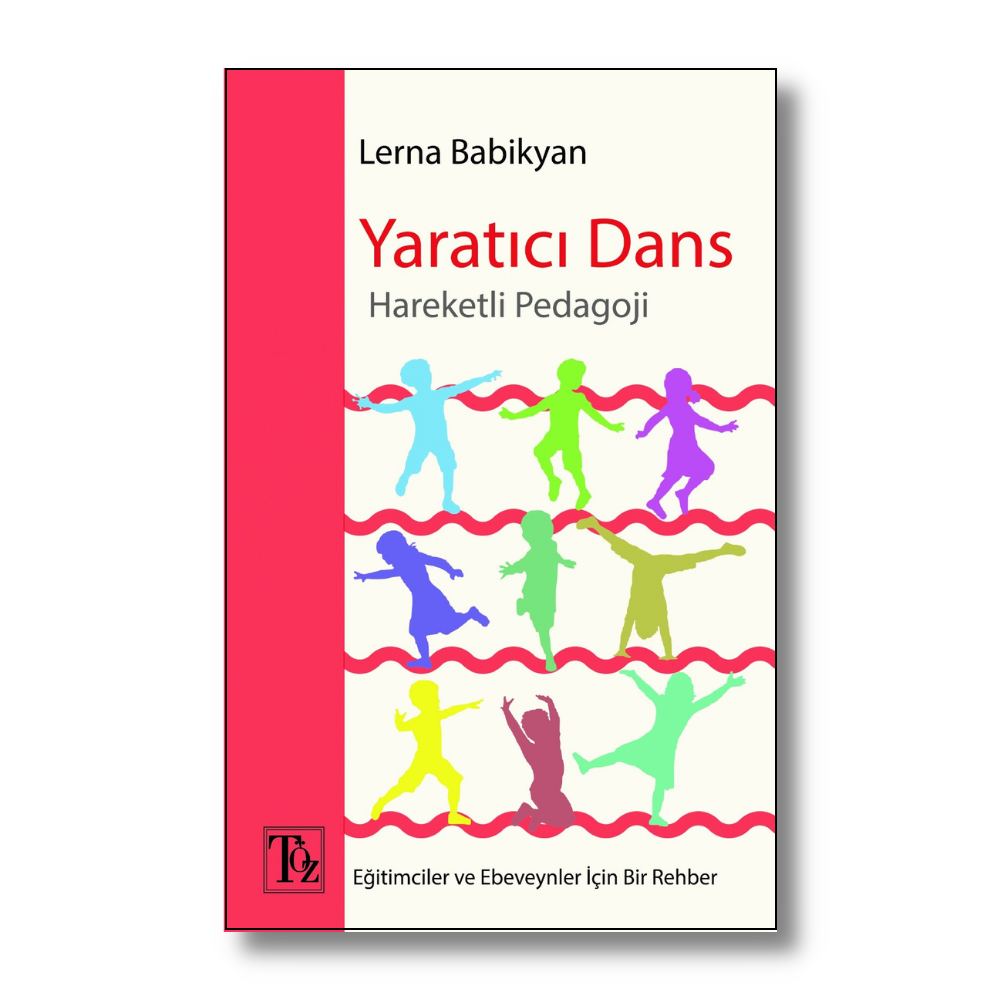
    The book is written in Turkish by Lerna Babikyan, to spread the creative dance culture in Turkey, including history of creative dance, lesson plans, family activities and embodied learning though dance; published in 2022 by Töz Publishing House; ISBN number 9786057186409

    “Dance is not only fun, encouraging, and motivating activity for children, but also a wonderful tool for learning by internalizing concepts.”
    From the earliest years of our lives, we naturally learn through movement—we connect, we touch, we respond. Movement and dance, which have existed since the beginning of the universe, have been part of human history through natural phenomena, mythological figures, and rituals; they have also visited our lives through performing arts and stage shows.
    This book has been written as a guide to move beyond the “guest” status of dance in the lives of individuals living in postmodern society, aiming to bring dance back to the center as a vital, educational, and artistic activity—to experience it anew.

    Creative Dance has long been used across the world both as an artistic activity and as an alternative educational tool, without enforced imitation, pressure, or comparison. Suitable for individuals of all ages who wish to explore their bodies through dance and discover their unique expression, creative dance practices not only nurture the physical and mental creativity of children and adults but also support the development of a positive body image beyond conventional notions of “beauty” and beyond gender norms.
    They invite us to live a life in harmony with and awareness of our bodies, to engage with the world in a playful, body-centered space that transcends words, and to learn and teach abstract and concrete concepts through dance.

  • Dancing with the Armenian Alphabet

    On a cold, rainy, and gloomy morning in Berlin four years ago, I was walking through the streets of the city. The only thing I had to do here was to create as an artist. Berlin welcomed me for this very reason: to survive by producing. But the question that mattered most to me was what I would create, what unique contribution I could offer to this city.

    I often think of my family, my roots. At times, connecting with my roots hurts, so I tend to avoid getting too entangled in them. Yet, precisely for that reason, I long to build a positive relationship with my roots. I want to share that positive connection with others through my art. I kept thinking about the Armenian alphabet, which has always inspired me with its lines and forms. I realized I wanted to dance with these letters. I wanted to remind Western societies of the journey these letters have taken since the 5th century CE, and gently widen the cultural-historical focus. That’s how the work began. I took each letter and explored different ways of drawing them with my body, developing partner-based dance exercises using the letters as a foundation.

    Growing Confidence Through Movement

    The idea of dancing with alphabets has been explored before, especially in alternative pedagogies like Waldorf education. In those contexts, tracing a letter with the body and sounding it aloud is used as a sensory-focused, experiential learning method. But in the approach I developed, the focus is not just on mimicking the letters with the body — the emphasis is on creativity. And that’s what bridges this work from a pedagogical context into artistic creation.

    This workshop, while supporting physical development, coordination, balance, attention, memory, and cultural understanding, also activates each participant’s innate creative potential. In Turkey, a dominant mindset and deeply flawed pedagogical tradition have ingrained beliefs like “I can’t dance,” “I’m not talented,” or “It’s not for me.” However, when individuals experience movement in a judgment-free space, these beliefs begin to dissolve. As they see themselves dancing and succeeding, their self-confidence grows.

    In Germany, on the other hand, there’s a long-standing tradition of inclusive, socially aware pedagogical policy. Across the country, there’s a vast infrastructure that allows people of all ages to engage with any art form to whatever degree they wish. This infrastructure doesn’t make art or artists elite — rather, it prioritizes art under a large umbrella and keeps it accessible for all.

    A Dance Language that Crosses Borders

    My workshop Dancing with the Armenian Alphabet attracted interest from participants from different countries and cultural backgrounds. Over the course of a month-long series, participants learned the letters and embodied them through spatial movement. Later, I invited them to explore the flow and structure offered by each letter — whether harmoniously or disruptively — through deconstructive movement research. I left the choice to them because I believe that each body’s unique creative potential is expressed when the individual listens to their own curiosity and needs, transforming movement into dance.

    From Berlin to Istanbul

    After hosting the workshop at Tatwerk Performative Forschung in Berlin, I later organized a session during one of my visits to Istanbul, at Çatı Contemporary Dance Association. With every new iteration, I found myself excited by the evolving possibilities within the method — even as an instructor. This curiosity led me to explore other alphabets: Japanese, Runic, Sumerian, Nazcan, and even further back to pictograms — the earliest forms of visual writing.

    Over time, I began offering these alphabet-based dance workshops in universities, community organizations, and online during the pandemic. I came to deeply understand that alphabets are, in fact, bodies that carry the past into the present. These visual languages — shaped across different regions and eras — have transmitted knowledge, perception, time, and experience, just like our bodies do.

    Our body is our home — the space we inhabit throughout life. Days, weeks, and months passed, but I still couldn’t feel at home in Germany. Many people around me shared that same feeling. Alongside all this, there was another fire burning inside me. Deep in my heart, I knew that the workshops and performances I was doing were most needed in Turkey. The work Dancing with the Armenian Alphabet, as well as the broader creative dance practices that form its foundation, could play a vital role in Turkey. By recognizing creative dance — alongside folk dance and ballet — as a legitimate, contemporary form of expression, we could foster healthier body awareness, support gender equality, and improve the quality of life for everyone. For these reasons, I returned to Istanbul without much hesitation.

    As soon as I came back, colleagues around me started asking, “Why did you return?” I told them about my goals and intentions.

    When the Word “Armenian” Was Removed

    In his book Writing: The Memory of Humanity, French poet, writer, linguist, and educator Georges Jean explains that whenever people have felt the need to record and preserve fleeting moments in the flow of history, writing became a necessity — almost a law. He also notes that the royal scribe who knew how to write always had a say in power structures.

    I began to hear that in academia, even words like democracy and creativity were increasingly discouraged. Some friends told me that during the final review of their theses, advisors asked them to remove such terms. It seemed censorship had reached academia too, especially as the relationship between media and political power solidified.

    In 2018–2019, I conducted field research for a second thesis focused on creative dance pedagogy. The phrase Dancing with the Armenian Alphabet was politely modified by my advisor, who was also the head of the dance department, saying, “Let’s just call it ‘Dancing with Alphabets.’” The word Armenian was removed. Creative dance — a practice with a theoretical foundation dating back to the 1920s and one of the roots of dance therapy — was also dismissed, with arguments like, “Is there such a thing as non-creative dance?”

    Up until that point, I had never felt the need to define myself ethnically within the profession I had chosen — art, which encompasses all languages, religions, races, and cultures. But faced with these censorships and this approach, I was shocked. Inside, a voice echoed: “This would never happen in Berlin. Where have I come back to?” Although I accepted these exclusions at the time, perhaps out of confusion, they were clear warnings of the challenges I would continue to face.

    Gandhi’s words still resonate: “Be the change you wish to see in the world.” As our need for honest, inclusive, peace-centered expression and action grows, art is waiting to connect with us — to serve as a tool for healing the wounds shaped by both family and educational systems.

    Maybe today is your first moment of contact. Perhaps you’ll put down this article, pick a letter from any alphabet that comes to mind, and draw it in the air at your own rhythm. Maybe you’ll even stand up and use both arms to dance with another letter. After all, dance is one of the strongest signs that we are still alive.

    My workshop, which began with the Armenian alphabet and expanded to include all alphabets from past and present, continues to bring together curious participants through various centers and institutions. It draws attention in international academic and artistic circles, but it also awaits local teachers — right here — who are interested in using it as a teaching method for language and literacy in schools.

  • Wind of Sinop

    From the steppes of Ankara to the north; I’m traveling by bus, leaving behind the  steppes of Ankara. As I enter the city of Sinop—a place I know only from my grandfather’s stories, yet know so little about—I’m greeted by statues of the Amazon Queen Sinope and Diogenes, one of the first philosophers of antiquity. Entering the city accompanied by a woman and a thinker warms my heart, almost inevitably. I had been hurriedly trying to memorize my lines from the play during the journey, but this city quickly slows me down and calms me. I take a deep breath, I see the sea, I feel the wind. After a while, I meet the people who have come to welcome me. I’m in my new, temporary home now.

    I was invited to the Sinop Biennial to perform the Turkish version of choreographer Evie Demetriou’s piece The Usual Suspect. The Biennial, initiated by its founder Melih Görgün and curated by a team from five different countries, takes place every two years in July and August in Sinop, bringing together local and international artists. University students from various departments work as assistants at the biennial, creating a productive space for learning, experimenting, working together, and sharing.

    After presenting my prepared performance, I choose to stay in Sinop a bit longer and experience it at a slower pace. I also intend to visit the village from which my maternal grandfather’s family migrated in the mid-1950s. But before diving into the past, I surrender myself to the present.

    Calm, Respectful, and Smiling

    During the summer months, Sinop draws visitors from nearby towns like Kastamonu, Boyabat, and Taşköprü, thanks to its clean sea and beautiful beaches. Its nostalgic innocence, its sunsets that embrace the soul, almost detach you from your present time and geography. In 2013, Sinop was named “The Happiest City” in Turkey, and it’s easy to see why—almost everyone is calm, respectful, and smiling. You can walk alone at any hour of the night without worry. However, the increasing population due to migration in recent years suggests that new social initiatives may be needed to help newcomers understand and integrate with this culture of respect and ease.

    Master Agop

    Sinop is home to modest and respectful coexistence among Turks, Greeks, Armenians, and since the 1850s, Circassians, Abkhazians, and Georgians who were exiled from Russia. Although most Greeks left after the population exchange, until the mid-1950s, Armenian and Greek populations continued to live in villages such as Sarıyer, Lala, Ahmetyeri, Kabalı, Abalı, and Altınoğlu. Ayancık was predominantly Greek, while Gerze was a mix of Greek, Armenian, and Turkish residents. Later, Armenians migrated to Istanbul or the U.S., and Greeks to Athens or Istanbul. However, some families maintained contact with their neighbors and returned to visit in the 1980s. The children and grandchildren of those who grew up away from these lands now come to see the villages where their elders were born.

    Sinop’s Last Armenian Family

    Before migrating, Sinop’s Armenians typically worked in broom making, basket weaving, and fishing. Today, only one Armenian family still lives in Sinop. Agop and Nazar Usta (Master Nazar) share the recent history of Armenian presence in Sinop through their own family stories.

    Fifty years ago, many Armenians lived with their Turkish neighbors in the Çamlık neighborhood. During Easter, pots were tinned, meals were cooked and shared with all neighbors, and everyone would dance horon together. Later, the state expropriated the land, forcing everyone to move. Most residents migrated to Istanbul, and those traditions faded. “It’s hard to live without kin around,” says Master Nazar, but he praises his friends in Sinop, noting that true friendships still endure there.

    Master Nazar

    Master Nazar is one of the most respected craftsmen in the Sinop Industrial District. Everyone loves and respects him. He is a master in engine repair—so much so that people say, “If Nazar Usta can’t fix it, no one can.” Even though he and his brother Agop occasionally visit relatives in Istanbul during Christmas or Easter, they continue to live in Sinop. If you ever find yourself in Sinop, you might want to visit them—they’re always happy to see guests.

    My Grandfather’s Village

    Before leaving Sinop, I head 20 kilometers out of town with friends from the biennial to visit my grandfather’s village, Ahmetyeri. We drive through small hills, trying to locate the village center. My plan is to find the oldest resident and ask about where my grandfather’s family once lived. Eventually, we meet Mehmet Amca (Uncle Mehmet). When I mention “my grandfather, Sarkis, Armenian” in a sentence, he says, “Alright, come with me,” and starts listing names he remembers: “Sultan (my grandfather’s mother), Surpig (his sister), Artin…” and the list continues. We give Mehmet Amca a ride in our car and drive in the direction he guides us.

    I focus on the small, modest wooden houses he shows me. I want to feel my grandfather’s undocumented (photoless) childhood deeply. Maybe, I think, maybe he ran down that slope; maybe he climbed up here; maybe he played in the fields with friends; maybe that’s the school he helped build and attended until third grade… Maybe. Maybe… The truth I may never fully know. But seeing my grandfather’s childhood with my heart fills me with a kind of warmth I cannot explain.

    Mehmet Amca’s son tells us about some Armenian neighbors who died outside Sinop in the 1980s but wanted to be buried in the village. He points us toward the cemetery. It’s now almost overgrown into a forest. We cut a path with a sickle and walk through thorny bushes to approach the graves. May they rest in peace…

    A moment comes when there’s nothing more to see or say… We thank the villagers and Uncle Mehmet and leave. On the way back, I feel satisfied with this journey. To my surprise, everyone in the car is deeply moved. We drive on in silence. As always, the road continues—toward the new and the unknown.

    This article published on Agos Newspaper in Turkish https://www.agos.com.tr/tr/yazi/10259/sinop-un-ruzgari

    Creative Dance/Embodied Pedagogy
    https://www.agos.com.tr/en/article/29492/creative-dance-embodied-pedagogy by Meri Tek Demir