Author: lerna

  • Dans ile Ekoloji

    Dans ile Ekoloji

    Dans ve ekoloji dersleri, çocukların doğa ile bağ kurmalarını sağlarken, bedenlerini ve çevrelerini keşfetmelerine olanak tanıyan yaratıcı bir öğrenme deneyimi sunar. Bu derslerde çocuklar, doğanın döngüleri, ekosistemler ve çevre bilinci gibi konuları öğrenirken, bu kavramları dans yoluyla araştırıp, ifade ederler. Her ders, bir ekolojik tema ile başlar ve çocuklar, bu temanın ritmini ve enerjisini dans ederek keşfederler. 

    Kazanımlar

    • Doğadaki elementler, yeryüzü şekilleri ve bitkiler gibi doğanın temel unsurlarını bedenleriyle ifade etmek, çocukların hem fiziksel hem de zihinsel farkındalıklarını artırır.
    • Dans ve ekoloji dersleri, çocukların çevreye olan duyarlılıklarını geliştirirken, aynı zamanda yaratıcılıklarını besler ve doğa ile iç içe bir öğrenme süreci sağlar.
    • Bu dersler, çocukların hem bedensel hem de duygusal olarak doğa ile bütünleşmelerini sağlayarak, sürdürülebilir bir gelecek için farkındalık kazanmalarına yardımcı olur.
  • Dance with Alphabets

    Dance with Alphabets

    The Alphabet Dance Workshop is a fun and creative activity that enhances both children’s language and writing skills and body awareness. In this workshop, children explore the world of the alphabet by embodying each letter through movement. Every letter is expressed with a dance move or a physical gesture, allowing children to learn the shapes, sounds, and meanings of the letters while also improving their coordination and flexibility.

    Outcomes

    • The Alphabet Dance Workshop offers children the opportunity to connect language with movement, making the learning process multidimensional and enjoyable.
    • Group activities and games strengthen social skills and nurture creativity.
    • This workshop engages both the mind and body, allowing children to learn while having fun.
  • Alfabelerle Dans

    Alfabelerle Dans

    Alfabelerle dans atölyesi, çocukların hem dil ve yazı becerilerini hem de beden farkındalıklarını geliştiren eğlenceli ve yaratıcı bir etkinliktir. Bu atölyede, çocuklar her bir harfi bedenleriyle canlandırarak alfabenin dünyasını keşfederler. Her harf dans ile beden aracılığı ile ifade edilir ve çocuklar bu süreçte harflerin şekillerini, seslerini ve anlamlarını öğrenirken aynı zamanda beden koordinasyonlarını ve esnekliklerini geliştirirler.

    Kazanımlar

    • Alfabelerle dans atölyesi, çocuklara hem dil ve yazı hem de hareket arasında bağlantı kurma fırsatı sunarak, öğrenme sürecini çok boyutlu ve eğlenceli hale getirir.
    • Grup çalışmaları ve oyunlar, çocukların sosyal becerilerini güçlendirirken, aynı zamanda yaratıcılıklarını da besler.
    • Bu atölye, çocukların hem zihinlerini hem de bedenlerini harekete geçirerek, eğlenirken öğrenmelerini sağlar.
  • Creative Dance

    Creative Dance

    Creative dance classes are movement based activities that support children’s physical and mental development, allowing them to move freely and express their emotions. In these classes, children use their imaginations to create their own dances without any specific choreography or rules.

    Outcomes

    • Ø Creative dance enhances children’s motor skills, balance, and coordination, while also boosting their self-confidence and helping them gain emotional awareness.
    • Ø Through group activities, children further strengthen their social skills and enjoy the pleasure of expressing themselves through dance.
    • Creative dance classes enable children to channel their energy positively and discover the limitless nature of imagination.
  • Yaratıcı Dans

    Yaratıcı Dans

    Yaratıcı dans dersleri, çocukların bedensel ve zihinsel gelişimlerini destekleyen, özgürce hareket etmelerini ve duygularını ifade etmelerini sağlayan hareket odaklı bir aktivitedir. Bu derslerde çocuklar, belirli bir koreografi veya kural olmadan, günün teması eşliğinde hayal güçlerini kullanarak kendi danslarını yaratırlar. 

    Kazanımlar

    • Yaratıcı dans, çocukların motor becerilerini, denge ve koordinasyonlarını geliştirirken, aynı zamanda özgüvenlerini artırır ve duygusal farkındalık kazanmalarına yardımcı olur. 
    • Grup çalışmaları sayesinde sosyal becerilerini de pekiştiren çocuklar, dans yoluyla kendilerini ifade etmenin keyfini çıkarır. 
    • Yaratıcı dans dersleri, çocukların enerjilerini pozitif bir şekilde kullanmalarını sağlarken, hayal gücünün sınırsız olduğunu keşfetmelerine olanak tanır.
  • Cartographic Echos – Dartington 2023

    Cartographic Echos – Dartington 2023

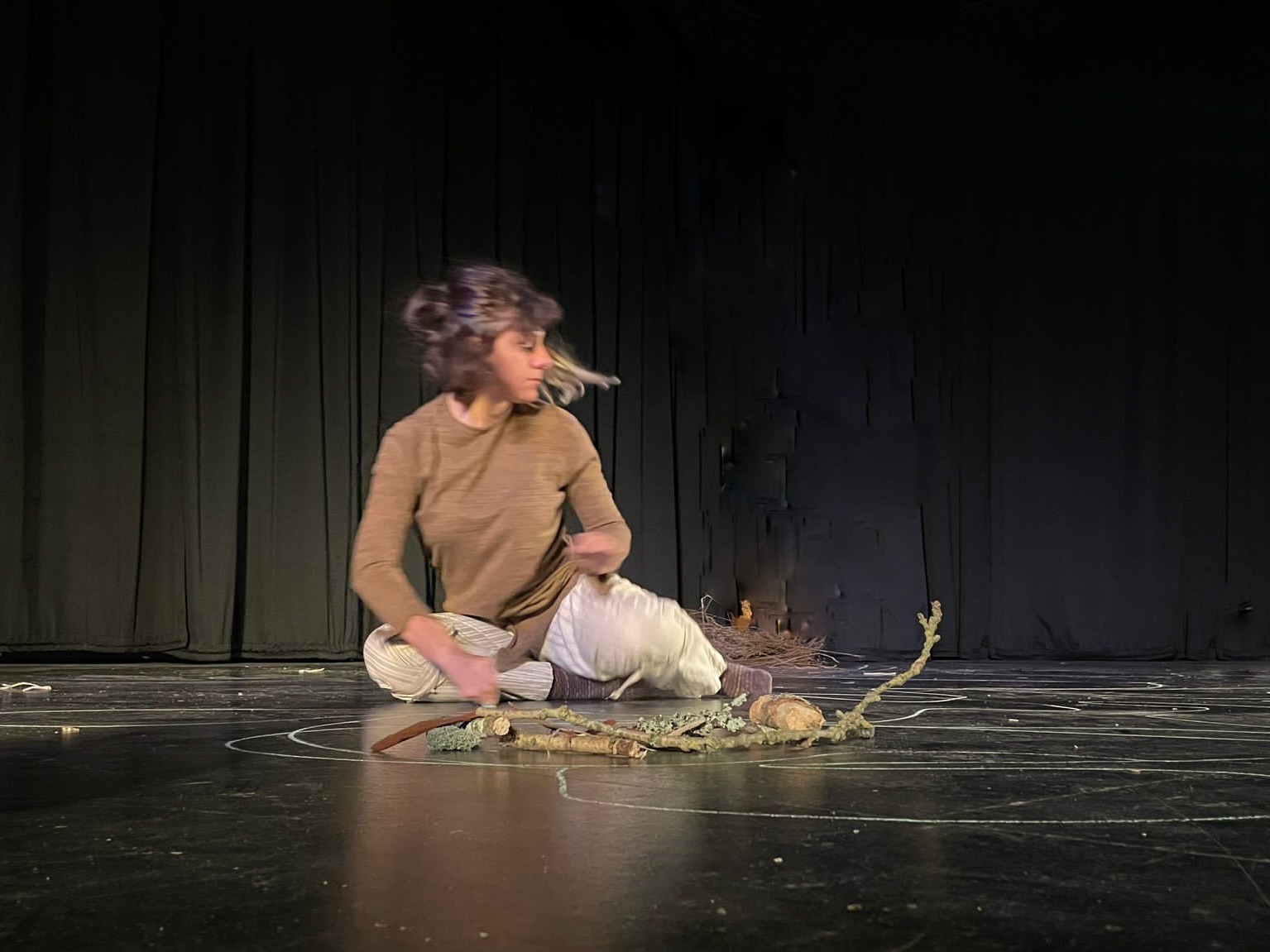
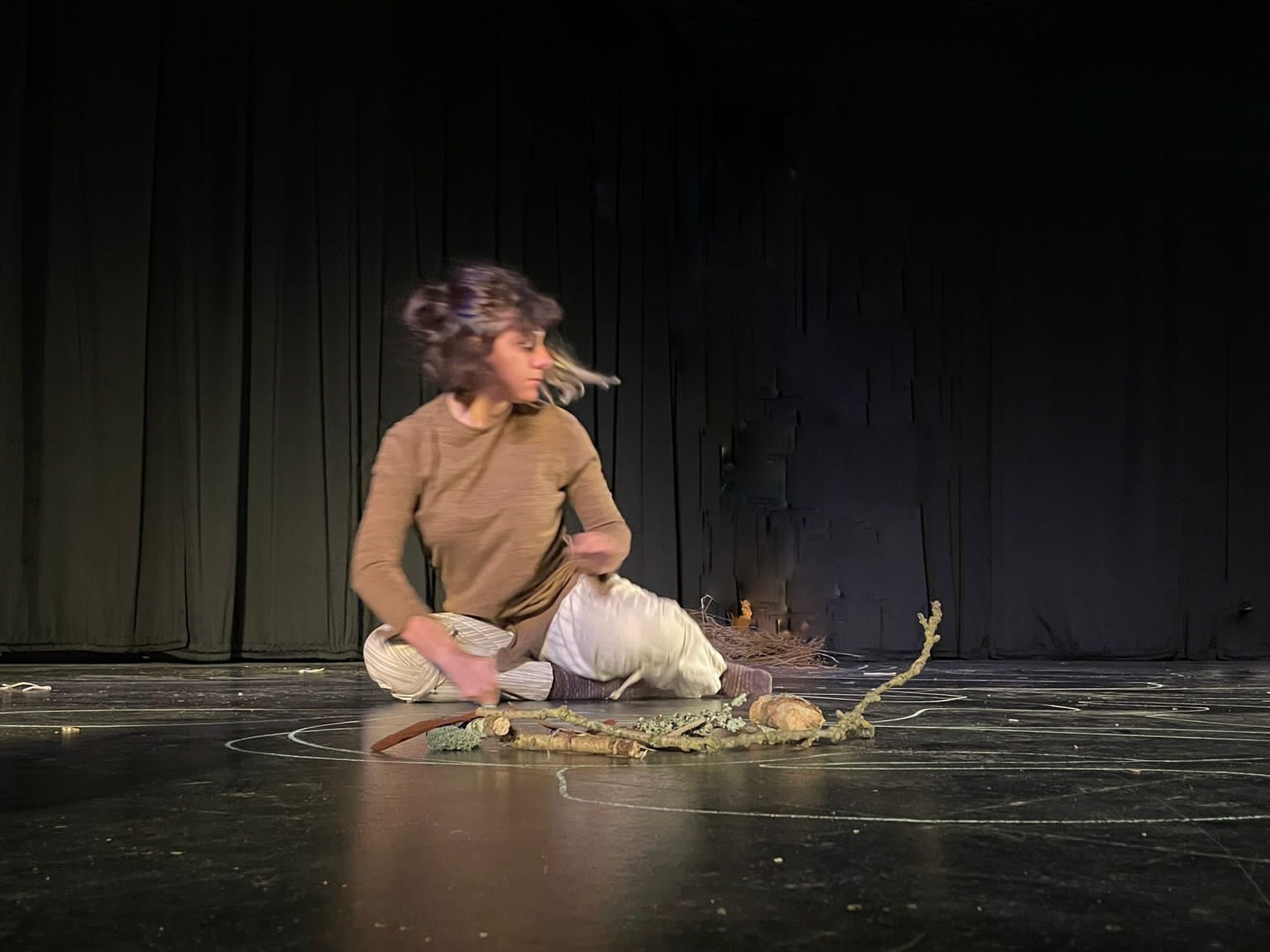
    “Kartografik Yankılar” canlı türlerinin sömürgeci tarihle ilişkide çok zamanlı yolculuklarına, kültürlerine, duygularına ve bir yeri eve dönüştürme süreçlerine dair estetik bir yansımadır. Eser hem aktif bir araştırma hem de dileyenlerin katılımcı olabileceği bir performans olarak yerlinin hikayesinden nesilsel bir kesiti, yerel floradan parçalar eşliğinde bedenlerken yeni bir yapı kurmanın yollarını arar.

  • Cartographic Echos – Dartington 2023

    Cartographic Echos – Dartington 2023

    “Cartographic Echos” is the aesthetic reflection of multi temporal journeys of varied living beings, cultures in relation to colonial history, emotions and homing a place. The piece is an active research and a participatory performance for the ones who wish to be the part of it.

    As both an active research and a performance where those who wish can participate; the piece looks for the ways to embodied establishment of a new structure while revisiting a section from indigenous’ generational story, by the company of pieces from the local flora.

  • Ghost Bodies Reuniting with the Soil

    On a May day, while enjoying the sense of emptiness after a long period of intense academic research and thesis writing, a tickle of curiosity led me to type some of the keywords I had explored in my thesis—such as Armenian, dance, alphabet, and embodied learning—into a search engine, eager to discover academic researchers with similar interests and their work.

    Among the results, the name Nilüfer Gros immediately caught my attention. First, I read her article Carrying the Nest: Rewriting History through Embodied Research. Then I watched her performance Enterrer La Robe – Burying the Dress, which she created for her doctoral research at the Paris State Conservatory, broadcast live from Paris. The performance is still available to watch on YouTube.

    In the dry and silent atmosphere of the independent dance scene in Turkey—already in decline since 2010—I had long stopped watching local works that are rarely staged, often apolitical, distanced from any quest for a new movement language, or part of over-sponsored art festival programs that mimic Western canon with exorbitant ticket prices. While elitist art often privileges those approved by the authorities of the field at a given time and context, contemporary dance in Turkey still lacks an accessible, sustainable, diverse, and inclusive policy, preventing it from reaching the general public. This is the outcome of a homogenizing, discriminatory, and denialist practice perpetuated by those in power, producing its own monologue across all levels of the cultural mainstream.

    Within this long-normalized environment, which has been unable to produce its own critique, watching Burying the Dress felt like a true breath of air. The work tells stories of violence endured by women of different identities and ages—especially those from the eastern regions of the country—from 1915 to the present, in a multilayered manner that also reveals recurring patterns in this chain of violence. The text, co-written by Nilüfer Gros and Nejbir Erkol, is performed in Turkish with French supertitles.

    The staging itself makes a statement: rather than using a flat wall or center stage, the performance takes place in a corner of the space, with the performer situated at the intersection. This choice inevitably invites the audience to focus on the urgency of the narrative, drawing them into a narrowing corridor of stories long kept in the dark.

    On stage is a silent woman, very pure; behind her lies a pile of soil. As she intermittently connects with this soil at various moments, I wonder: is she digging her own grave? Searching for someone? Unearthing a victim of exile, an accident, or a woman who died during an attack in her village? Gros began hearing these stories while working at a state university in Mardin. Over the years, as she traced the stories of these women, they began to turn into ghosts in her life—appearing beyond time and geography, even after she moved to another country. In its emotional intensity, the work becomes a ritual of mourning, confrontation, and ultimately, healing—for women who long to be free of their bodies, for those whose existence or disappearance most of us are unaware of. Is the soil applied to the face a gesture of purification? Or does it signify the traces left by violence on a woman’s soul and body, passed on through generations? I’m not sure which is more clearly reflected, but watching it feels good—it compels me to return to this web of meaning time and again. Every woman in this story feels familiar. As the stories unfold—through words, voice, and sometimes silent bodily movements—it’s as if they take wing. Despite their weight, they bring a sense of relief.

    While watching, I drift into my own bodily-kinesthetic memory… I remembered the soil brought from Malatya—Hrant Dink’s hometown—during his funeral. Soil is our homeland, our belonging, the space where we feel safe, rooted, nourished, and nurtured. But, as shown in this piece, it can also have other meanings. Like when my grandfather, five years old in Erbaa, Tokat, in 1915, was dressed as a girl by the elders of his family and had his face nearly covered with soil to prevent him from being taken away.

    Nilüfer presents a transparent body on stage—one not crushed under the weight of all these stories. With deep awareness, she mediates the displacement stories of Armenian, Kurdish, Assyrian, Yazidi, Turkish, and Jewish women, making them visible and heard. The first time we hear her real voice is when she sings a lament composed by Virginia Kerovpyan’s grandmother, Arshaluys, during her exile.

    It’s hard to even applaud when the performance ends. I’m overwhelmed by both the pleasure of witnessing a sincere, well-crafted piece and the conflicting shock of having these painful stories strike my flesh. While my heart celebrates this encounter with the words, “What a wonderful, wonderful performance!” I also wish that the pain held in every family could find its own voice, its own words, its own expression—without seeking approval or understanding. And I remember James Baldwin’s words:
    “Not everything that is faced can be changed, but nothing can be changed until it is faced.”

    This article published on Agos Newspaper, in Turkish https://www.agos.com.tr/tr/yazi/26464/ermeni-alfabesi-ile-dans

    This article published on Agos Newspaper in Turkish https://www.agos.com.tr/tr/yazi/29092/toprakla-bulusan-hayalet-bedenler

  • I am Hundered – Berlin 2017

    I am Hundered – Berlin 2017

    İçerik, koreografi, performans : Lerna Babikyan
    Müzik: Heinali
    Dramaturjik Destek: Seçil Honeywill
    Video: Selda Asal

    “I am Hundered” modern toplumun yalnızlık dolu bireysellik argümanına karşı, bilindik ve bilinmeyen atalarımızı onurlandırmaya yönelik yarı biyrografik bir eserdir. Yaşam döngüleri ile birbiri ile bağlantıda olan nesiller ve coğrafyalara dair bireysel, sosyal ve topluluksal bir araştımadır

    Saha Derneği Desteği ile, Apartment Project Berlin, 48 Stunden Neukölln Festival işbirliğinde, 2017-Berlin

  • Honey & Mood Productions

    Honey & Mood Productions

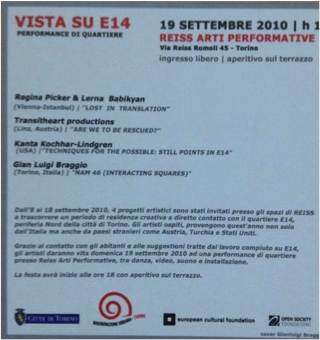
    Lerna Babikyan ve Avusturyalı sanatçı Regina Picker tarfından kurulmuş disiplinler arası bir performans topluluğudur…2009-2012 yılları arasında Torino, Istanbul, Viyana Impuls Dans Festivali ve Abd’de Santa Barbara’da çeşitli festivaller dahilinde sanatçı misafirlik programları süresince eserler üretip, kamusal alanlarda ve yerel sahnelerde sergilemiştirlerdir.